
Apple Cider Donut Cake Recipe: How to Make It at Home
Martha Stewart’s Apple Cider Doughnut Cake | Martha Bakes Recipes
Martha Stewart bakes a bundt-style cake that captures the flavor of farm-stand apple cider doughnuts, finished with a classic cinnamon-sugar coating.
The first bite should leave a little cinnamon sugar on your fingers. Then comes the tender crumb, the warmth of nutmeg, and that gently tangy apple flavor that makes you think of orchard stands and paper bags filled with fresh donuts.
That is the goal of this apple cider donut cake recipe: the cozy character of a cider donut, baked into one generous cake. No deep fryer. No shaping dough. Just a Bundt pan, a saucepan, and a kitchen that smells like a very good reason to stay home.
Picture a cool Saturday morning. Someone puts the coffee on while you slice a cinnamon-coated cake at the counter. The sugar scatters, the first slice disappears, and suddenly nobody is in much of a hurry. This is the kind of cake that fits that scene beautifully.
The most important step happens before the batter even exists: reducing the apple cider. Below, you will learn why it matters, how to keep the cake tender, and how to get that classic donut-style finish without making the outside soggy.
1. What Makes Apple Cider Donut Cake Taste Like a Donut?
An apple cake and an apple cider donut cake are close relatives, but they are not the same dessert. Apple cake often relies on chunks of fruit, a heavy crumb, or a thick frosting. This version keeps the texture relatively fine and lets concentrated cider, warm spices, and a cinnamon-sugar coating do the work.
It is a baked cake, so it will not have the fried crust or chew of a traditional cider donut. What it delivers instead is the familiar flavor combination in an easy-to-slice format that is especially useful for brunch, bake sales, and casual gatherings.
The flavor starts in the saucepan
Ordinary apple cider contains a lot of water. Adding more of it to cake batter does not necessarily create a stronger apple flavor; it can simply make the batter too wet. Simmering the cider first removes some water and concentrates its flavor.
For this recipe, reduce 2 cups of cider to 3/4 cup. That measured endpoint matters more than the number of minutes on the stove. A wide saucepan reduces liquid faster than a narrow one, and a vigorous simmer behaves differently from a gentle bubble.
The reduced cider should still pour easily. You are concentrating a beverage, not cooking it into a sticky caramel.
Why the coating is just as important
Think about the difference between a plain donut and a cinnamon-sugar donut. The inside may be identical, but the first impression changes completely. Here, a thin layer of melted butter helps cinnamon sugar cling to the ridges and sides of the cake.
A useful way to think about this recipe is that it has two flavor stages: apple and spice inside, buttery cinnamon crunch outside. A thick glaze would hide some of that contrast, so this cake stays deliberately simple.
2. Gather Your Ingredients and Choose the Right Cider
Yield: About 12 servings. Pan: One 10- to 12-cup Bundt pan. Oven: 350°F / 175°C, conventional setting. Timing: Allow about 2 1/2 to 3 hours, including reducing and cooling the cider, baking, and cooling the cake. Hands-on work takes roughly 30 minutes.
Read through the ingredient list before starting. In particular, the melted butter and reduced cider need time to cool, and the eggs and sour cream mix more smoothly when they are not refrigerator-cold.
For the reduced cider
- 2 cups (480 ml) nonalcoholic apple cider, reduced to 3/4 cup (180 ml) and cooled.
For the cake batter
- 3 cups (360 g) all-purpose flour, spooned into the measuring cup and leveled, or preferably weighed.
- 2 teaspoons baking powder.
- 1/2 teaspoon baking soda.
- 2 teaspoons ground cinnamon.
- 1/2 teaspoon ground nutmeg.
- 1/4 teaspoon ground allspice, optional.
- 3/4 teaspoon fine salt.
- 3/4 cup (150 g) granulated sugar.
- 3/4 cup (150 g) packed light brown sugar.
- 1/2 cup (113 g) unsalted butter, melted and cooled until just warm.
- 1/4 cup (60 ml) neutral oil, such as canola or sunflower oil.
- 3 large eggs, at room temperature.
- 1/2 cup (120 g) full-fat sour cream, at room temperature.
- 2 teaspoons vanilla extract.
- All 3/4 cup of the cooled reduced cider.
For the cinnamon-sugar coating
- 3 tablespoons (42 g) unsalted butter, melted.
- 1/2 cup (100 g) granulated sugar.
- 2 teaspoons ground cinnamon.
- A small pinch of fine salt, optional.
Apple cider vs. apple juice: what should you buy?
In the United States, apple cider usually means a nonalcoholic, often unfiltered apple beverage. In other places, cider commonly means an alcoholic drink. For this recipe, choose nonalcoholic cider made from apples, preferably without added sugar or spices. Pasteurized cider is a straightforward choice.
Check the label before buying. Apple cider vinegar is not a substitute, and alcoholic hard cider is not what this formula is designed around. If only apple juice is available, use 100% apple juice and reduce it to the same volume. The cake will still work, although its apple flavor may be lighter or less complex.
Do not use frozen apple juice concentrate straight from the container as an equal-volume replacement. Its concentration is different. Reconstitute it according to the package first if it is your only option.
Why both butter and oil?
Butter brings flavor, while oil helps the crumb stay soft as the cake cools. Sour cream adds richness and acidity, and brown sugar adds a gentle caramel note. Together, they create a tender cake without requiring a creaming step or a stand mixer.
You will also need a saucepan, mixing bowls, a whisk, a flexible spatula, a cooling rack, and a pastry brush. A kitchen scale and an oven thermometer are helpful, but this recipe does not depend on specialized baking equipment.
3. Prepare the Cider and Pan Before Mixing
Step 1: Reduce the apple cider
Pour the 2 cups of cider into a medium saucepan. Bring it to a boil over medium-high heat, then lower the heat to maintain a steady simmer. Cook uncovered until you have 3/4 cup remaining, usually about 15 to 25 minutes, though your stove and saucepan may change that range.
As the liquid level drops, check more frequently. Carefully transfer the cider to a heatproof measuring jug to confirm the volume. If you still have more than 3/4 cup, return it to the saucepan and continue simmering.
If you accidentally reduce it a little too far, add enough water to bring it back to 3/4 cup. If it smells burnt or tastes bitter, start again; those flavors will not disappear in the cake.
Let the reduction cool to room temperature or barely lukewarm. To speed things up, place the heatproof container in a bowl of ice water and stir occasionally, keeping the cooling water out of the cider. Do not pour hot reduction into the egg mixture.
Step 2: Prepare the Bundt pan thoroughly
Preheat the oven to 350°F / 175°C with a rack in the middle. Grease every interior surface of the Bundt pan, including the central tube and the tops of any decorative ridges.
Use a baking spray that contains flour, or brush the pan with softened butter or shortening and dust it lightly with flour. Tap out the excess. Ordinary oil spray alone may not release a detailed Bundt shape as reliably.
Check the pan capacity rather than judging by its diameter. Two Bundt pans can look similar but hold different volumes. Use a 10- to 12-cup pan and fill it no more than about three-quarters full. If your pan leaves excess batter, bake that batter separately in prepared muffin cups and check them much earlier than the cake.
Step 3: Set up the ingredients
Whisk the flour, baking powder, baking soda, cinnamon, nutmeg, optional allspice, and salt together in a large bowl. Break up any visible pockets of baking soda or spice.
In another large bowl, have the sugars, cooled melted butter, oil, eggs, sour cream, and vanilla ready. This short pause prevents the familiar baking scramble: batter half mixed, oven ready, and one important ingredient still hiding in the refrigerator.
4. Mix and Bake a Tender Apple Cider Donut Cake
Step 4: Combine the wet ingredients
Whisk the granulated sugar, brown sugar, melted butter, and oil until evenly blended. Add the eggs one at a time, whisking well after each. Stir in the sour cream and vanilla until the mixture looks smooth, then whisk in the cooled reduced cider.
You do not need to beat this mixture until fluffy. Unlike a butter cake that depends on creaming solid butter and sugar, this batter gets its rise primarily from its leavening agents and the heat of the oven.
Step 5: Fold in the dry mixture
Add the dry ingredients to the wet ingredients in two additions. Use a flexible spatula to fold gently, scraping the bottom and sides of the bowl. Stop as soon as no dry flour remains.
The batter should be thick but spreadable. Small lumps are fine; streaks of unmixed flour are not. Resist the temptation to keep stirring until it looks perfectly polished. Once flour meets liquid, extra mixing can encourage a tougher crumb.
Transfer the batter to the prepared Bundt pan and smooth the surface. Gently tap the pan once or twice against a folded kitchen towel to release larger air pockets.
Step 6: Bake until the center is set
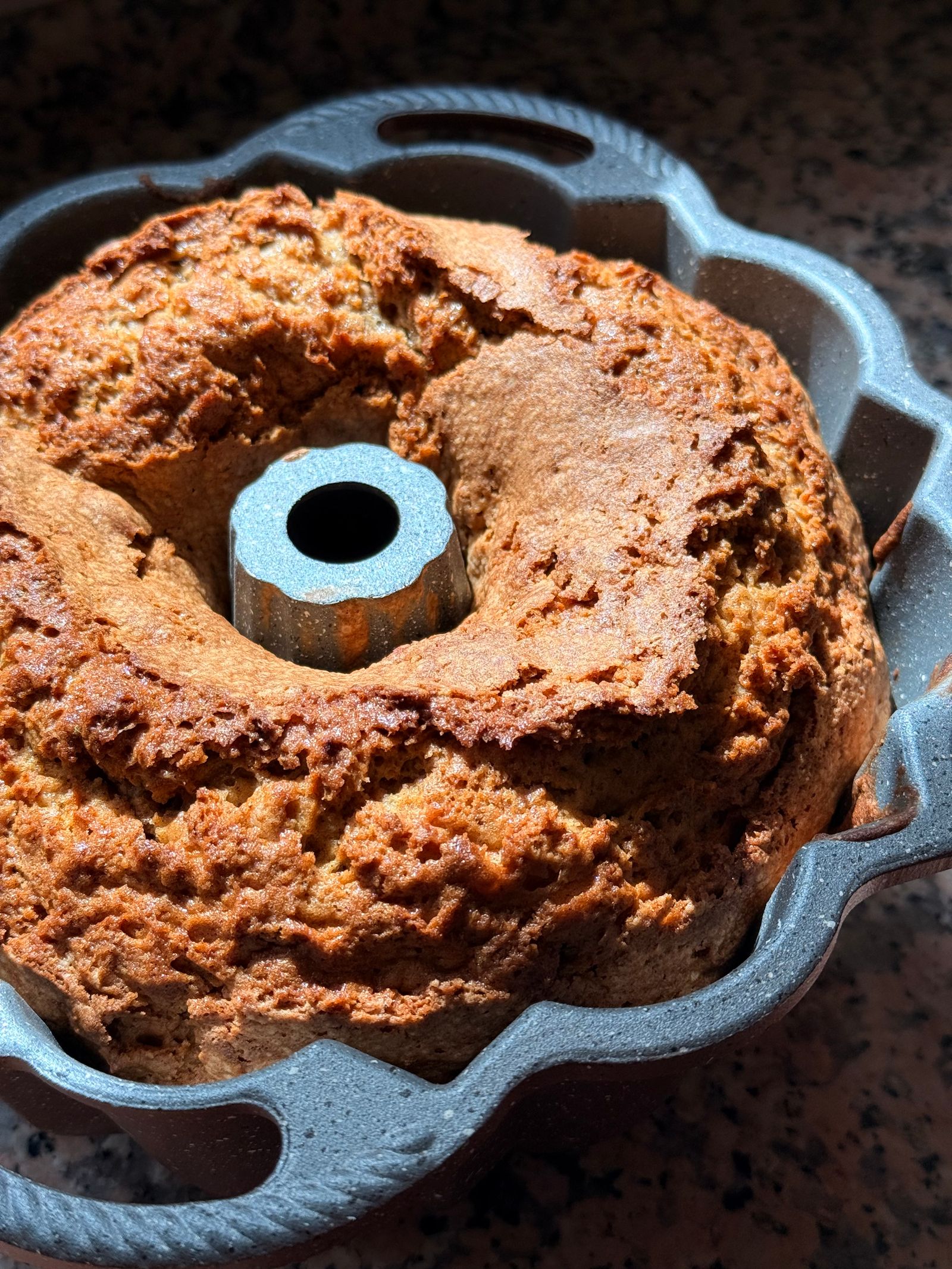
Bake for 45 to 60 minutes, beginning your first check around 45 minutes. Pan material, shape, and actual oven temperature affect the timing, so treat the clock as a reminder to check rather than an automatic finish line.
The cake is ready when the surface springs back lightly and a wooden skewer inserted into the thickest part comes out clean or with a few moist crumbs. Test the cake itself, not the open center of the pan. Wet batter on the skewer means it needs more time.
If the top browns before the middle is done, lay a piece of foil loosely over the pan for the remaining baking time. Avoid repeatedly opening the oven during the early part of baking, when the cake is still setting.
Step 7: Cool briefly, then turn out
Place the baked cake, still in its pan, on a cooling rack for 15 minutes. This gives the crumb time to firm up without leaving the cake in the pan until fully cold.
If needed, gently loosen accessible edges with a thin silicone spatula, taking care not to damage a nonstick surface. Set a cooling rack over the pan, hold both securely with oven mitts, and invert. Lift away the pan carefully.
If the cake does not release immediately, leave the inverted pan in place for several minutes and give it a gentle tap. Avoid aggressive shaking; a warm cake is still delicate. Any small patch left behind can often be fitted back into place and disguised with the coating.
5. Give It That Cinnamon-Sugar Donut Finish
This is where a good apple Bundt cake starts looking and tasting like the dessert you came for. Put a tray or sheet of parchment beneath the cooling rack to catch drips and loose sugar.
Step 8: Brush and coat while slightly warm
Mix the coating sugar, cinnamon, and optional pinch of salt in a small bowl. Once the unmolded cake is warm rather than steaming hot, brush a thin layer of melted butter over the top and sides.
Work in sections: brush one area, then immediately sprinkle or gently pat cinnamon sugar onto it. Continue around the cake, including the accessible surface near the center opening. You may not need every spoonful of the coating mixture.
The goal is an even sandy crust, not a wet paste. If the cake is extremely hot, the butter and sugar may soak in or melt. If you pour butter over it instead of brushing, the lower edges can become greasy.
Let the crust settle before slicing
Allow the coated cake to cool for at least another 30 minutes before cutting; cooler slices will hold together more cleanly. Use a serrated knife and a gentle sawing motion rather than pressing straight down through the sugary surface.
For the most recognizable donut-style finish, serve it the day it is coated. The cake remains enjoyable later, but moisture gradually softens the sugar crust. That is a normal trade-off, not a sign that anything went wrong.
Want to bake ahead for a morning gathering? Bake and cool the cake the previous evening, then store it airtight. Brush the room-temperature cake lightly with melted butter and apply the cinnamon sugar shortly before serving. The butter gives the sugar something to cling to even when the cake is no longer warm.
6. Fix Common Problems and Make Sensible Swaps
Why did my cake turn out dry?
The most common suspects are too much flour and too much time in the oven. Scooping flour straight from the bag can pack more into a cup than you intend. Weighing the 360 g of flour removes that variable.
Next time, start checking earlier and remove the cake when the skewer has no wet batter. Do not wait for every crumb on the skewer to look bone-dry. For an already dry cake, serve slices with softly whipped cream or a spoonful of cooked apples rather than soaking the entire cake and losing the crust.
Why is the middle gummy or sunken?
Possible causes include underbaking, using more than 3/4 cup of reduced cider, inaccurate leavener measurements, or too much mixing after adding flour. Cutting while very hot can also make a properly baked crumb seem compressed and sticky.
Measure the reduction after cooking, keep the oven door closed during the initial bake, and check the thickest part before removing the pan. If the cake repeatedly browns outside while staying raw inside, verify the oven temperature with an oven thermometer.
Why is the apple flavor subtle?
Ciders vary in sweetness, acidity, and intensity. A mild cider may produce a gentler result even after reduction. Warm spices can also dominate if you increase them too freely.
Start with a cider you enjoy drinking and keep the measured reduction step. Do not add extra liquid cider to the finished batter to chase stronger flavor. For a more apple-forward serving, pair the baked cake with a small spoonful of apple butter.
Which substitutions are reasonable?
- Full-fat plain Greek yogurt: Use the same amount by weight in place of sour cream. The texture and tang may vary slightly by brand.
- Apple juice: Use 100% juice and reduce it just as you would cider. Expect a somewhat different apple flavor.
- Different spices: Skip the optional allspice or replace it with a small pinch of ground ginger. Keep cinnamon as the main spice.
- Salted butter: It can work in the batter, but reduce the added fine salt to about 1/2 teaspoon; butter brands vary in salt content.
- Gluten-free flour: A blend labeled for one-to-one baking is a possible starting point, but this recipe is written for wheat flour and the texture is not guaranteed to match.
Avoid replacing all the fat with applesauce or cutting the sugar dramatically on the first attempt. Sugar and fat affect tenderness, moisture, and structure, not just sweetness. Learn the base recipe before making several changes at once.
Can you add chopped apples?
You can make an excellent cake with apple pieces, but they introduce extra moisture and interrupt the fine, donut-like crumb. For this version, leave them out. Serve sautéed apples alongside the cake if you want fruit pieces without changing how the batter bakes.
7. Serve, Store, and Make the Most of Every Slice
Simple pairings that let the cake shine
This homemade apple cider donut cake does not need frosting. Coffee, black tea, or a glass of cold milk gives its buttery cinnamon coating room to stand out.
- For brunch: Serve modest slices beside eggs, fresh fruit, and something savory to balance the sweetness.
- For dessert: Add a small scoop of vanilla ice cream or a dollop of lightly sweetened whipped cream.
- For an afternoon snack: Enjoy a plain slice at room temperature, when the apple and spice aromas are easy to appreciate.
- For gifting: Let the cake cool completely before packaging so trapped steam does not dissolve the coating.
How to store apple cider donut cake
Keep the plain, coated cake in an airtight container at cool room temperature for up to 3 days. In a hot or humid kitchen, refrigerate it instead. Refrigeration can firm the crumb, so let individual slices come toward room temperature before serving.
Store whipped cream, ice cream, and other perishable accompaniments separately. If you add a perishable topping directly to the cake, refrigerate it promptly rather than following the plain-cake storage guidance.
To freeze, wrap fully cooled slices individually and place them in a freezer-safe container for up to 2 months for best quality. Thaw while wrapped at room temperature. Freezing an uncoated portion gives you the option to add a fresh butter-and-sugar finish after thawing.
A quick plan for your first bake
- Start with the cider: Reduce it to the measured volume and let it cool.
- Prepare the details: Weigh the flour, grease the pan carefully, and preheat the oven.
- Keep the mixing gentle: Stop folding when the flour disappears.
- Check doneness, not just time: Look for a set center and a skewer without wet batter.
- Finish with patience: Unmold after a brief rest, coat while warm, and let the cake settle before slicing.
The beauty of this cake is not that it demands a special occasion. It makes an ordinary one feel worth remembering. A saucepan of cider, a dusting of cinnamon, and a little patience are enough to bring something of the orchard bakery into your own kitchen.
Make the cake, put the coffee on, and invite someone to take the first slice. If a little cinnamon sugar lands on the counter, consider it part of the welcome.