
Mini Trampoline Weight Loss: Does It Work?
The Real Benefit of Rebounding Exercise
Dr. Eric Berg explains what rebounding on a mini trampoline is and the main benefits of this low-impact exercise, including its effect on circulation and the lymphatic system.
The mini trampoline looks almost too playful to count as exercise. Then you try a few minutes of controlled bouncing, your breathing picks up, and suddenly the question changes: could something this enjoyable actually help you lose weight?
Imagine a familiar evening. You planned to exercise, but work ran late, the weather turned miserable, and the couch is making a convincing argument. A short workout you can do at home starts to look more realistic than a trip to the gym. That is where rebounding earns its appeal—not through a special fat-burning trick, but by making movement easier to start.
Yes, mini trampoline rebounding can support weight loss. It uses energy, can improve cardiovascular fitness, and may help you build a consistent exercise habit. But it does not automatically produce weight loss, target belly fat, or replace supportive eating habits.
Here is what rebounding can realistically do, how to get started safely, and what to check before buying a mini trampoline that might otherwise become an unusually springy laundry rack.
1. Does Rebounding Really Work for Weight Loss?
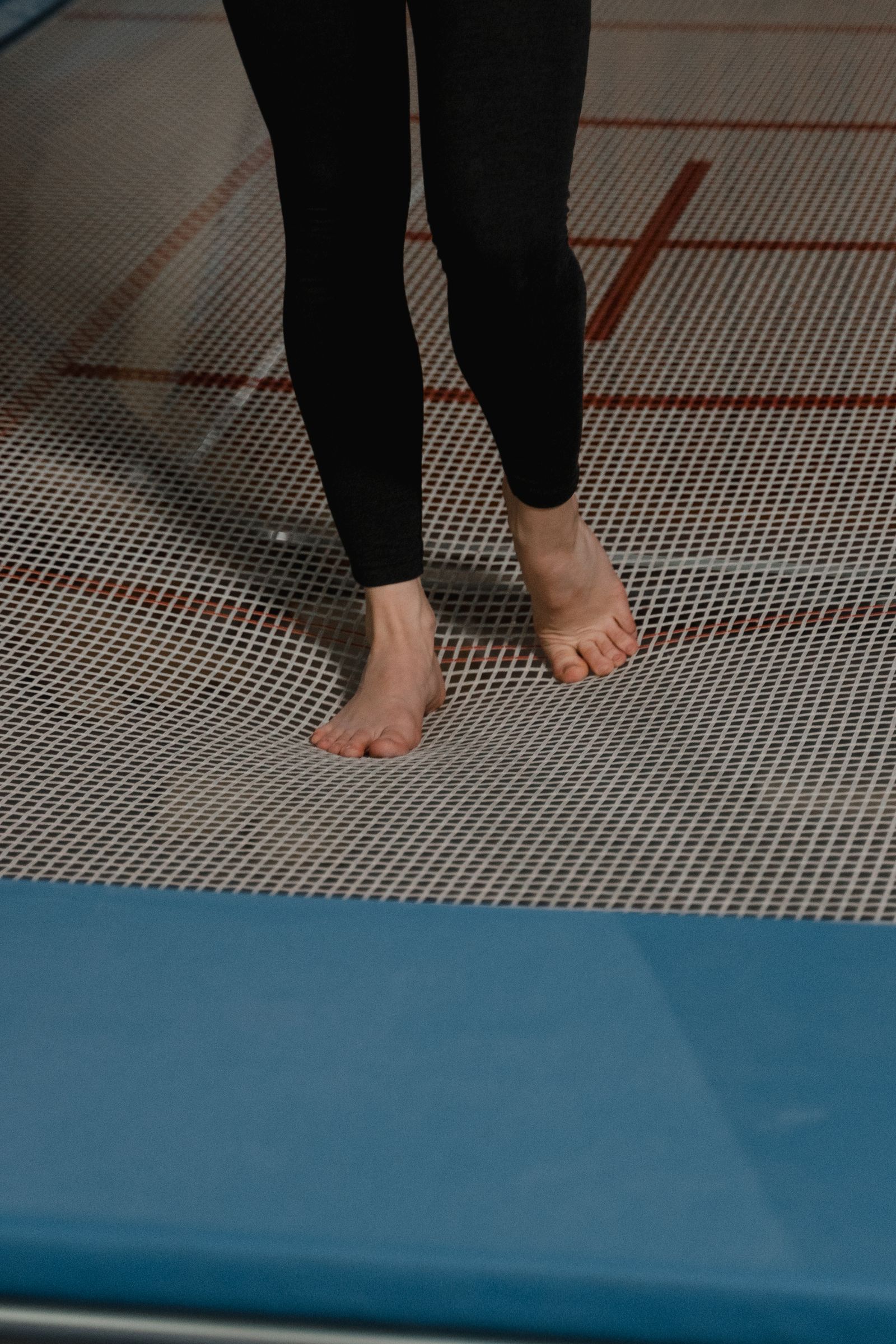
Rebounding means exercising on a small fitness trampoline, usually with controlled bouncing, marching, or jogging movements. Unlike recreational trampoline jumping, the goal is not height or tricks. It is steady movement you can repeat with good control.
Your leg muscles push against the mat, while your trunk and other stabilizing muscles help keep you upright. As movement becomes faster or more demanding, your breathing and energy expenditure increase. That makes rebounding a legitimate form of physical activity—not just a wellness trend.
The calorie deficit still matters
Body fat generally decreases when, over time, your body uses more energy than it receives from food and drink. Rebounding can contribute to that energy gap, but the result also depends on eating patterns, other daily activity, sleep, medications, health conditions, and individual physiology.
It is possible to exercise regularly without losing weight. You might become hungrier and eat more, or feel tired and move less for the rest of the day. Neither response means you failed. It simply explains why exercise calories do not translate neatly into predictable pounds lost.
Think of the rebounder as one useful tool, not the entire weight-loss plan. Pairing manageable activity with sustainable food choices usually makes more sense than trying to bounce your way out of an overly restrictive or inconsistent diet.
What does the evidence actually show?
Small studies of mini trampoline exercise suggest that it can provide a meaningful cardiovascular workout, with some reporting improvements in fitness, balance, or body-composition measures in particular groups. However, study sizes, exercise programs, and participant characteristics vary. Long-term evidence specifically establishing rebounding as a superior weight-loss method is limited.
The broader evidence for regular physical activity is much stronger. The World Health Organization recommends that adults aim for 150–300 minutes of moderate-intensity aerobic activity per week, or 75–150 minutes of vigorous activity, plus muscle-strengthening work on at least two days.
Rebounding can count toward the aerobic target when it raises your effort enough. Easy bouncing may be light activity, which still has value, but it should not automatically be counted as a vigorous workout. Start with what you can comfortably manage and build gradually.
2. How Many Calories Does a Mini Trampoline Burn?
This is where marketing often gets ahead of reality. A claim such as “burn hundreds of calories in minutes” leaves out the details that matter most: body size, workout duration, movement intensity, rest breaks, and fitness level.
A gentle bounce while watching television is not the same workout as sustained, brisk marching with coordinated arm movements. Both involve a trampoline. They do not require the same amount of energy.
A useful estimate—not a promise
To illustrate how exercise estimates work, suppose a 70-kilogram adult, approximately 154 pounds, performs activity averaging 4–6 metabolic equivalents, or METs, for 20 minutes. A standard MET calculation gives roughly 100–150 total calories during that period.
That is a hypothetical moderate-effort example, not a measured calorie range for every rebounder session. It also includes the energy the body would have used at rest during those minutes; the additional exercise calories would be somewhat lower. Your actual expenditure could fall outside the example.
Fitness watches and equipment displays provide estimates, too. Bouncing and repeated arm movement can make wearable readings less reliable. Use them to look at broad patterns rather than treating each number as an exact food allowance.
Measure effort without chasing a screen
- Light effort: You can chat easily and sing without much difficulty.
- Moderate effort: You can talk in sentences, but singing would be uncomfortable.
- Vigorous effort: You can say only a few words before pausing for breath.
For most beginners, light-to-moderate sessions are a sensible starting point. You do not need to reach breathless intensity to make the workout worthwhile.
Here is the more useful comparison: a modest session completed four times a week contributes more activity than an ambitious workout you keep postponing. The best calorie-burning feature may be how willing you are to get back on tomorrow.
3. The Real Benefits—and the Claims to Ignore
Rebounding has genuine advantages. Keeping those separate from exaggerated promises helps you decide whether it fits your life.
Why people find it easier to stick with
- Convenience: You can exercise at home without a commute or a weather check.
- Short-session flexibility: A few manageable bouts can help you accumulate activity during a busy day.
- Enjoyment: Music and varied footwork can make exercise feel less repetitive.
- Cardiovascular demand: Sustained movement can raise your breathing and heart rate.
- Coordination practice: Controlled movements challenge timing and stability, although the unstable surface is not suitable for everyone.
The mat gives beneath your feet, so some people find rebounding more comfortable than running on hard ground. But lower impact does not mean no impact or no risk. Your ankles, knees, hips, back, and pelvic floor still experience repeated loading. Comfort depends on your body, technique, equipment, and symptoms.
No, it will not selectively melt belly fat
Your abdominal muscles help stabilize you, but using those muscles does not make nearby fat disappear. Fat loss occurs across the body in patterns influenced by genetics, hormones, and other factors. Claims that one bounce variation specifically removes lower-belly fat are misleading.
Likewise, sweating more does not prove that you burned more fat. A rapid drop on the scale after a sweaty session is largely a fluid change, not sudden fat loss.
Be skeptical of detox promises
Movement and muscle contractions help normal fluid circulation, including lymph flow. That does not establish that a rebounder uniquely “flushes toxins,” treats lymphatic disease, or causes weight loss through detoxification. Your liver and kidneys already perform essential waste-processing functions.
Another common claim says a few minutes of bouncing equal a much longer run. There is no universal conversion. A meaningful comparison requires similar measures of duration, intensity, and energy expenditure.
The honest benefits are already worthwhile: moving more, improving fitness, and finding an activity you enjoy. They do not need a dramatic biological explanation to matter.
4. A Beginner Rebounding Workout You Can Build On
First, forget impressive jumps. Good beginner rebounding is small, controlled, and almost deliberately unexciting. You should feel steady before you try to feel challenged.
Place the equipment on a level surface with suitable grip, following its instructions. Check the legs, frame, mat, and any handlebar before stepping on. Clear the surrounding area and overhead space, and keep children and pets away during your session.
Start with this gentle 10-minute session
- Minutes 0–2: Settle in. Stand near the center with feet about hip-width apart and knees soft. Practice small weight shifts, using a correctly fitted support bar if needed.
- Minutes 2–4: Try a low bounce. Press gently into the mat. Your feet can remain in contact with it throughout the movement.
- Minutes 4–6: March slowly. Lift one foot at a time only as high as you can control. Keep your gaze forward.
- Minutes 6–8: Alternate movements. Switch between 30 seconds of comfortable marching and 30 seconds of easy bouncing.
- Minutes 8–10: Ease down. Return to gentle weight shifts, then stand still before carefully stepping off.
If ten minutes feels too long, try three to five. If lifting a foot makes you unstable, stick to supported weight shifts or choose a stable-surface activity instead. The first session should leave you thinking, “I could do that again,” not wondering how you will manage the stairs.
Use these technique cues
- Keep your knees softly bent rather than locked.
- Stay near the center of the mat and keep movements low.
- Let your trunk stay comfortably upright; avoid exaggerated arching or rigid bracing.
- Breathe continuously rather than holding your breath.
- Follow the manufacturer's footwear guidance and avoid slippery socks.
- Step off only once the mat and your body are still.
A flexible four-week progression
Week 1: Try 5–10 minutes on three days, at an easy pace. Focus on balance and how you feel afterward.
Week 2: If you recover comfortably, try 10–15 minutes on three or four days. Add relaxed arm movements only if you remain steady.
Week 3: Work toward 15–20 minutes on several days. If appropriate, include a few 30-second periods of brisker marching separated by at least a minute of easy movement.
Week 4: Maintain a comfortable routine or gradually extend some sessions. Use walking or another activity to help build your overall weekly aerobic time.
This is an example, not a deadline. Repeat a week or reduce the workload if needed. Increase duration, frequency, or intensity one at a time rather than making everything harder together. Persistent soreness, unusual fatigue, or worsening symptoms are reasons to ease back.
5. Make the Habit Support Lasting Weight Loss
Picture a hypothetical beginner named Maya. She buys a rebounder and initially plans to use it for 45 minutes every day. By the third session, her calves ache and she starts avoiding it.
Then she changes the rule: eight comfortable minutes after closing her laptop. Over time, she adds a few minutes when she feels ready. She also starts taking a lunchtime walk and preparing a more satisfying lunch. Nothing looks dramatic, but her routine becomes repeatable.
This is not a promised transformation or a clinical case. It illustrates a practical point: a routine succeeds when it fits the person doing it. A trampoline can lower the barrier to exercise, but you still need a plan that survives ordinary life.
Give the habit a clear trigger
Choose a specific cue, such as finishing work or starting your favorite playlist. Keep a minimum version available: “On busy days, I will do five easy minutes.” A short session preserves the habit without requiring you to ignore fatigue or other priorities.
Support the workout with satisfying meals
You do not need a special rebounding diet. Build meals around protein sources, fiber-rich foods, fruit or vegetables, and portions that suit your needs. For example, lunch might be beans or chicken with vegetables and brown rice, rather than a tiny snack that leaves you ravenous by evening.
Avoid treating every workout as something that earns a large food reward. Equally, do not punish yourself by skipping meals after missing a session. If tracking food feels stressful or you have a history of disordered eating, work with a qualified professional on a non-restrictive approach.
Keep strength training in the picture
Rebounding uses muscles, but it does not usually replace progressive strength training for all major muscle groups. Two weekly sessions might include appropriately adapted squats or chair stands, pushing movements, rows, and hip hinges. Strength work helps maintain muscle and physical function during weight loss.
Sleep and recovery matter, too. When you are regularly exhausted, both exercise and food decisions become harder. More bouncing is not always the missing ingredient.
Track more than the scale
- Consistency: How many manageable sessions did you complete?
- Fitness: Does the same workout feel easier?
- Comfort: Are you moving without pain, leaking, or instability?
- Body changes: If useful for you, observe longer-term weight or waist trends rather than daily fluctuations.
Scale weight shifts with fluid, digestion, and menstrual-cycle changes. Look for patterns across several weeks. Better stamina is meaningful progress even when the scale is temporarily unchanged.
6. Who Should Be Cautious About Rebounding?
The playful appearance can hide an important fact: a rebounder is an unstable surface that repeatedly loads your body. Falls, ankle sprains, muscle soreness, and aggravation of existing symptoms are possible.
Speak with a healthcare professional before starting if you have significant balance problems, recurrent dizziness, recent surgery, an acute injury, unstable heart disease, or another condition that could make exercise unsafe. People with osteoporosis, especially a history of fragility fractures, may need individualized advice about fall risk and loading.
During pregnancy, avoid starting an unfamiliar bouncing routine without guidance from your maternity care team; changing balance and fall risk matter. Postpartum recovery also deserves an individual approach rather than a fixed return-to-bouncing date.
Pay attention to pelvic-floor symptoms
Urine leakage, pelvic heaviness, pressure, or pain during bouncing are not signals to push harder. Rebounding can aggravate symptoms in some people, and it is not a proven universal treatment for pelvic-floor weakness.
Stop or switch to a comfortable lower-impact activity and consider seeing a pelvic-health physiotherapist. Advice should reflect your symptoms and recovery needs, not simply tell everyone to perform more pelvic-floor squeezes.
Know when to stop
Stop exercising if you develop sharp pain, dizziness, new palpitations, or unusual breathlessness. Chest pain or pressure, fainting, or severe unexplained shortness of breath warrant urgent medical assessment.
A handlebar may provide support, but it does not eliminate fall risk or make every workout appropriate. If staying upright takes all your attention, a stable-surface option such as walking, seated exercise, or stationary cycling may be a better starting point.
7. Is a Mini Trampoline Worth Buying?
A rebounder is worth considering if you enjoy the sensation, have enough safe space, and want an indoor activity you can use regularly. It is less compelling if you dislike bouncing, have symptoms it aggravates, or already enjoy an accessible exercise routine.
Check these details before you buy
- Weight rating: Choose a model rated appropriately for your body weight and follow all manufacturer limits.
- Frame and leg stability: Look for secure connections, suitable non-slip feet, and clear setup instructions.
- Usable mat area: Check the actual exercise surface, not just the overall frame diameter.
- Support-bar design: If you need one, confirm that it fits securely and is intended for that model.
- Room clearance: Allow safe space around and above you, including overhead fans and lights.
- Noise and storage: Consider downstairs neighbors, equipment weight, and whether you can safely manage any folding mechanism.
- Maintenance and returns: Check replacement-part availability, inspection guidance, warranty terms, and the return policy.
Spring and bungee designs can feel different, but neither automatically burns more fat. Comfort, control, build quality, and suitability for your needs matter more than the mechanism's marketing story. If possible, try a supervised beginner session or test a model before committing.
Rebounding vs. walking: which should you choose?
Walking is familiar, accessible, and usually requires no specialized equipment. Rebounding offers an indoor alternative that some people find more entertaining. Either can support weight management when done consistently at an appropriate effort.
You do not have to choose a winner. Walk when you want fresh air; rebound when an indoor session is more practical. Variety can make regular activity easier to maintain.
The bottom line: choose the workout you will repeat
Mini trampoline rebounding can help with weight loss, but it works through ordinary mechanisms: energy expenditure, improved fitness, and consistent movement. It cannot guarantee a particular result, selectively remove belly fat, or cancel out the rest of your routine.
If it suits your health and feels enjoyable, start with a few controlled minutes. Build slowly, eat in a way that supports you, and keep strength training and recovery alongside the bouncing.
You do not need a spectacular first workout. You need a safe, realistic reason to come back. Sometimes the most useful piece of exercise equipment is simply the one that makes moving feel inviting again.