
Rucking for Weight Loss: Does It Work and How to Start?
How & Why to Ruck for Weight Loss & Strength | Michael Easter & Dr. Andrew Huberman
Author Michael Easter and Dr. Andrew Huberman explain why rucking is an underrated way to burn calories and build strength, and share a simple protocol for getting started safely.
Imagine finishing your usual neighborhood walk feeling as though you actually worked out—without running a single step. The route is familiar. The time commitment is manageable. The difference? A lightly loaded backpack.
That is the appeal of rucking for weight loss: taking something you already know how to do and making it more demanding. No complicated choreography. No race pace. Just walking while carrying weight.
But there is a catch. A heavier backpack does not automatically mean faster fat loss, and copying a military training session can turn a promising habit into an injury. The useful version is less dramatic: choose a manageable load, build gradually, and make the routine repeatable.
Yes, rucking can support weight loss by increasing the energy cost of walking. Whether you lose weight, however, depends on your overall activity, eating habits, recovery, and consistency. Here is how to put those pieces together without turning every walk into a survival exercise.
1. What Is Rucking—and Why Does a Backpack Matter?
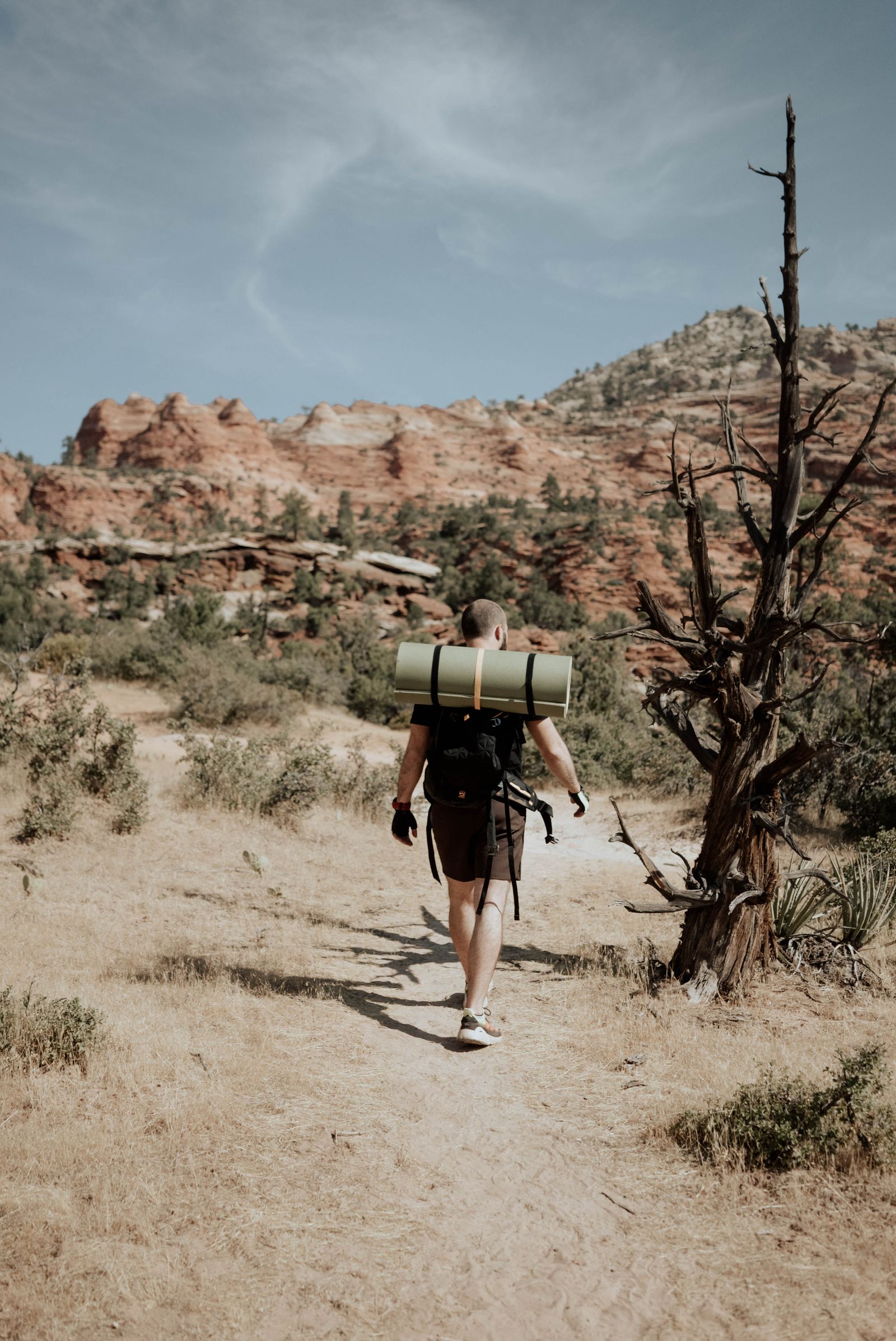
Rucking means walking with weight in a backpack, often called a rucksack. It has military roots, but recreational rucking does not require military distances, heavy equipment, or boots. For a beginner, it might simply mean a short walk on a flat path with a small, securely positioned load.
The extra weight increases the work required to move your body. Your legs propel a heavier total load, while muscles around your trunk and shoulders help stabilize the pack. Your heart rate and breathing may increase compared with an unloaded walk at the same speed.
Think of it as a dial, not a switch. You can change the challenge through walking time, pace, terrain, or pack weight. The mistake is turning all four dials at once.
Rucking vs. walking: which is better?
Neither wins automatically. Regular walking is easier to recover from, needs almost no equipment, and may be the better starting point if you are inactive or have joint symptoms. Rucking can make a familiar walking route more challenging without requiring a transition to jogging.
The comparison only makes sense when you consider what you will actually do. A comfortable 40-minute walk may contribute more to your weekly activity than a 15-minute ruck that leaves you sore enough to avoid exercise for three days.
Rucking vs. running: a different trade-off
Rucking usually has less impact than running because it keeps a walking gait, with no airborne phase. However, less impact does not mean no joint stress. Added weight increases loading, and hills, uneven surfaces, and fatigue can make that load harder to manage.
Running generally burns more energy per minute than easy, lightly loaded rucking, though the comparison changes with speed, terrain, and pack weight. Choose based on comfort, preference, and your training history—not claims that one activity is universally superior.
2. Does Rucking Actually Work for Weight Loss?
Rucking can help create an energy deficit, meaning you use more energy than you consume over time. That deficit drives weight loss. Carrying a pack is one way to increase expenditure, but it does not bypass the role of food intake or guarantee a particular result.
There is also an important evidence distinction: research on load carriage supports the idea that carrying weight increases the energy cost of walking. That is not the same as proving that recreational rucking produces better long-term weight loss than other sustainable exercise routines. Direct research on rucking specifically as a weight-loss program is limited.
How many calories does rucking burn?
There is no reliable universal number. Your energy expenditure depends on:
- Body mass: moving a larger total mass generally requires more energy.
- Pack weight: extra load usually raises the demand, but the relationship is not a simple calorie bonus.
- Pace and duration: faster or longer walks generally increase expenditure.
- Terrain: inclines, sand, and rough trails can make the same distance harder.
- Individual factors: fitness, walking efficiency, and environmental conditions affect the effort.
For context, the Compendium of Physical Activities assigns brisk level walking at roughly 3.5 miles per hour an intensity of about 4.3 metabolic equivalents, or METs. Using the standard MET estimation formula, a person weighing 170 pounds would expend roughly 175 calories in 30 minutes at that intensity, including resting energy use. That is an illustrative walking estimate—not a prediction for a loaded walk.
A backpack may increase that expenditure, but adding 10 pounds does not justify claiming a precise extra calorie total. Wearables may also estimate loaded walking poorly, especially if they do not account for the pack. Use calorie figures as rough context, not permission to eat back an exact number.
The advantage most calorie charts miss
Picture a hypothetical beginner named Maya. She dislikes running but already walks after work. Instead of forcing herself through workouts she dreads, she adds a light pack to two short walks each week. A month later, she is still doing them.
Her biggest advantage is not a spectacular calorie burn. It is a routine that fits her life. A modest activity repeated consistently can be more useful than an intense plan abandoned after the first enthusiastic weekend.
Rucking cannot target belly fat, either. Fat loss occurs across the body according to factors including genetics and hormones. A tighter waist may eventually follow overall fat loss, but the backpack does not choose where it comes from.
3. Benefits, Drawbacks, and Who Should Be Cautious
The strongest case for rucking is practical: it can add a cardiovascular challenge to walking with relatively little equipment. The strongest argument against it is equally practical: extra load is only useful if your body tolerates it.
Potential benefits beyond the scale
- Cardiovascular conditioning: loaded walking can raise the effort enough to provide a meaningful aerobic stimulus.
- Muscular endurance: your legs and trunk work to move and stabilize the load over time.
- Flexible scheduling: short sessions can fit into an existing walking habit.
- Outdoor time: fresh surroundings and daylight may make activity more enjoyable and support well-being.
- Easy progression: you can adjust duration or terrain without learning a completely new sport.
Keep expectations realistic. Rucking is not a replacement for a complete strength-training program, and it does not automatically correct posture. A pack that makes you hunch or crane your neck may reinforce the opposite of what you want.
Possible side effects and drawbacks
Common problems include blisters, shoulder pressure, chafing, and excessive muscle soreness. Too much load or distance can aggravate foot, ankle, knee, hip, or back symptoms. Heat stress can also build faster when you work harder under a pack.
If you have a heart or lung condition, balance problems, osteoporosis, a recent operation, or ongoing back or joint pain, ask a qualified healthcare professional whether loaded walking is appropriate. During pregnancy or postpartum recovery, get individualized advice rather than starting from a generic pack-weight rule.
If you are currently inactive, build comfortable unloaded walking first. Being able to walk for roughly 20 to 30 minutes without pain or unusual exhaustion is a useful practical starting point, not a medical clearance test.
Stop exercising for chest pain, faintness, severe or unusual breathlessness, or new numbness or weakness. Seek urgent medical attention for concerning symptoms, particularly chest pain or fainting. Do not dismiss sharp or worsening joint pain as something you need to push through.
4. How to Choose Your First Rucking Setup
You do not need to buy a specialized pack before discovering whether you enjoy rucking. For very light loads, a sturdy backpack that fits comfortably may be enough. As loads increase, pack design and support become more important.
What to check before buying a backpack
- Fit: the pack should sit close to your back without bouncing or pulling you backward.
- Shoulder straps: look for adjustable, comfortable straps that distribute pressure rather than digging in.
- Load security: compartments or internal restraints should keep the weight from shifting.
- Support: a sternum strap can improve stability; a properly fitted load-bearing hip belt may help transfer weight to your hips.
- Construction: stitching, zippers, and the pack's stated load capacity should suit the intended weight.
- Return policy: a pack that feels fine empty can feel very different during a loaded walk.
Start with soft, manageable loads, such as well-secured water bottles or a small sandbag designed for training. Weigh the whole pack, including water and accessories. Wrap rigid items to prevent pressure points, but avoid loose objects that can slide or strike your back.
Position the load close to your body, centered and stable. Avoid weight hanging far from your back or sitting so high that it affects your neck. Dedicated rucking plates can be convenient, but they are optional—not a prerequisite for results.
How much weight should a beginner carry?
Start lighter than your enthusiasm suggests. For many adults who already walk comfortably, about 2 to 5 pounds total is a conservative trial load. Some may tolerate more; others should begin with an empty pack or no pack at all.
You may see advice to start with 10% of body weight. Treat that as a guideline some programs use, not a universal safety threshold. Ten percent can be too much for someone who is deconditioned, has symptoms, or is carrying a higher body weight already.
The right starting load lets you walk naturally, speak in full sentences, and finish feeling you could have continued. If your shoulders tighten, your stride changes, or the pack makes you lean markedly forward, reduce the load.
Footwear and small essentials
Wear comfortable walking or trail shoes with reliable traction. Heavy boots are unnecessary for most neighborhood sessions. Use socks that limit friction, and test footwear on short outings before attempting longer routes.
Carry water appropriate to the weather and duration, bring a phone, and choose a familiar route. In hot conditions, walk at a cooler time and shorten the session. Remember that drinking water changes your pack weight along the way; that is perfectly fine.
5. A Beginner Rucking Plan You Can Actually Repeat
Your first month should teach you how your body responds, not prove how much you can carry. The following plan is an example for an adult who already tolerates regular walking. Repeat a week or step backward whenever needed.
Week 1: test the habit
- Complete two loaded walks on nonconsecutive days.
- Walk for 10 to 15 minutes per session on flat, predictable ground.
- Use a very light pack, such as 2 to 5 pounds total, or less if needed.
- Begin with a few minutes of easy unloaded walking and finish at an easy pace.
Check how you feel during the walk, later that day, and the next morning. Mild muscular fatigue can occur; sharp pain, persistent joint discomfort, numbness, or a changed walking pattern are reasons to stop and reassess.
Week 2: add a little time
- Keep the same pack weight and two-session schedule.
- If week one felt comfortable, extend each loaded walk to 15 to 20 minutes.
- Maintain a conversational pace rather than chasing distance.
- Keep ordinary unloaded walks on other days if they feel good.
Week 3: build consistency
- Aim for two walks of about 20 to 25 minutes if recovery remains comfortable.
- Keep the load and terrain unchanged.
- If you prefer an extra session, keep the sessions shorter instead of increasing frequency and duration together.
- Check for hot spots on your feet and adjust socks or pack fit early.
Week 4: choose one small progression
If the previous week felt manageable during the sessions and afterward, choose one change: add about five minutes to a walk, introduce a gentle incline, or add a small amount of weight. You do not need to increase anything simply because a new week has arrived.
There is no well-established progression percentage that guarantees injury prevention for every beginner. Small changes guided by symptoms and recovery are more sensible than following a rigid rule regardless of how you feel.
Technique cues worth remembering
- Stand comfortably tall, with your eyes forward and shoulders relaxed.
- Take natural steps rather than reaching far ahead with your feet.
- Keep the pack snug enough to avoid bouncing, without restricting breathing.
- Allow a natural arm swing and avoid gripping the straps continuously.
- Slow down on slopes; downhill walking can be demanding under load.
Use the talk test to guide effort. At moderate intensity, you should be able to talk but not comfortably sing. For your earliest sessions, stay toward the easier end. You should finish thinking, I can see myself doing that again, not wondering how you will manage the stairs tomorrow.
6. Make Rucking Part of a Weight-Loss Strategy
A backpack can increase the demand of a walk. It cannot repair a routine built around inconsistent meals, inadequate sleep, and workouts so hard that you spend the rest of the day recovering on the couch.
Eat for a sustainable deficit, not a punishment cycle
Weight loss generally requires a sustained energy deficit, but aggressive restriction can undermine training and make hunger harder to manage. Start with repeatable meals: include a protein source, vegetables or fruit, a fiber-rich carbohydrate, and an appropriate amount of fat.
For example, after a lunchtime ruck, a meal of beans or chicken, rice, and vegetables can support recovery without needing a special sports product. Most short beginner sessions do not require energy gels or sports drinks.
Notice whether rucking makes you hungrier. That does not mean it is failing; it means food intake deserves attention too. A planned meal or snack may work better than arriving home ravenous and eating whatever is nearest.
Keep strength training and ordinary movement
Adults are generally advised by the World Health Organization to aim for 150 to 300 minutes of moderate-intensity aerobic activity weekly, or 75 to 150 minutes of vigorous activity, plus muscle-strengthening activity on at least two days. Start below these amounts if necessary and build gradually; some activity is better than none.
Rucking can count toward aerobic activity when the effort is sufficient. It need not supply every minute. Combine it with unloaded walking, cycling, swimming, or other activities you enjoy. Add appropriate strength exercises for major muscle groups to support strength and function while losing weight.
Watch for compensation outside your workouts. If a heavier ruck makes you avoid errands, skip other walks, and sit more all afternoon, it may not improve your total daily activity. The best load supports the rest of your day instead of consuming it.
Track trends without obsessing over one weigh-in
- Record sessions: note duration, pack weight, terrain, and perceived effort.
- Monitor recovery: track foot comfort, joint symptoms, sleep, and next-day energy.
- Watch longer-term changes: if weighing yourself is helpful, compare trends across several weeks under similar conditions.
- Include non-scale markers: waist measurements, clothing fit, and easier walking can add context.
New or harder exercise can temporarily increase water retention, masking changes in body fat. Avoid responding to a few flat weigh-ins by doubling your pack weight. If your longer-term weight trend is unchanged, review eating patterns and total activity before making training harder.
7. Common Rucking Questions—and Your First Step
Should you ruck every day for weight loss?
Daily loaded walking is unnecessary, especially at the beginning. Two nonconsecutive sessions each week provide an opportunity to learn how you recover. Use unloaded walks or other comfortable activities between sessions. More frequent rucking may suit experienced people, but it is not a requirement for progress.
Is heavier always better?
No. Extra weight is useful only while you can maintain comfortable movement and recover well. A slightly longer easy walk may be a better progression than a heavier pack. For weight loss, weekly consistency matters more than the largest number you can put on your back.
Can you ruck on a treadmill?
Yes, provided you can use it safely and your pack does not affect balance. Start slowly on a level belt, use the safety clip, and follow the machine's instructions. If you need to hold the rails continuously to manage the load or incline, reduce the difficulty.
How soon will you see results?
You may notice better walking tolerance before visible body changes. Weight-loss timing varies with your overall energy balance, starting point, health, and consistency. No credible plan can promise a specific number of pounds lost just from wearing a backpack.
The simplest starting line
Choose a familiar, flat route. Set aside 10 to 15 minutes. If you already walk comfortably, try a very light, securely fitted pack; if not, begin without added weight. Return home, notice how you feel, and decide whether the same session would be manageable again after recovery.
That small decision captures what makes rucking useful. It does not need to be extreme to count. It needs to fit your body and your life well enough to become something you keep doing.
Rucking works best as an upgrade to a sustainable walking habit—not a shortcut around healthy habits. Start with less than you think you need, build only when you are ready, and let consistency carry more of the weight than your backpack does.