
Year-End Review: How to Reflect and Plan for 2027
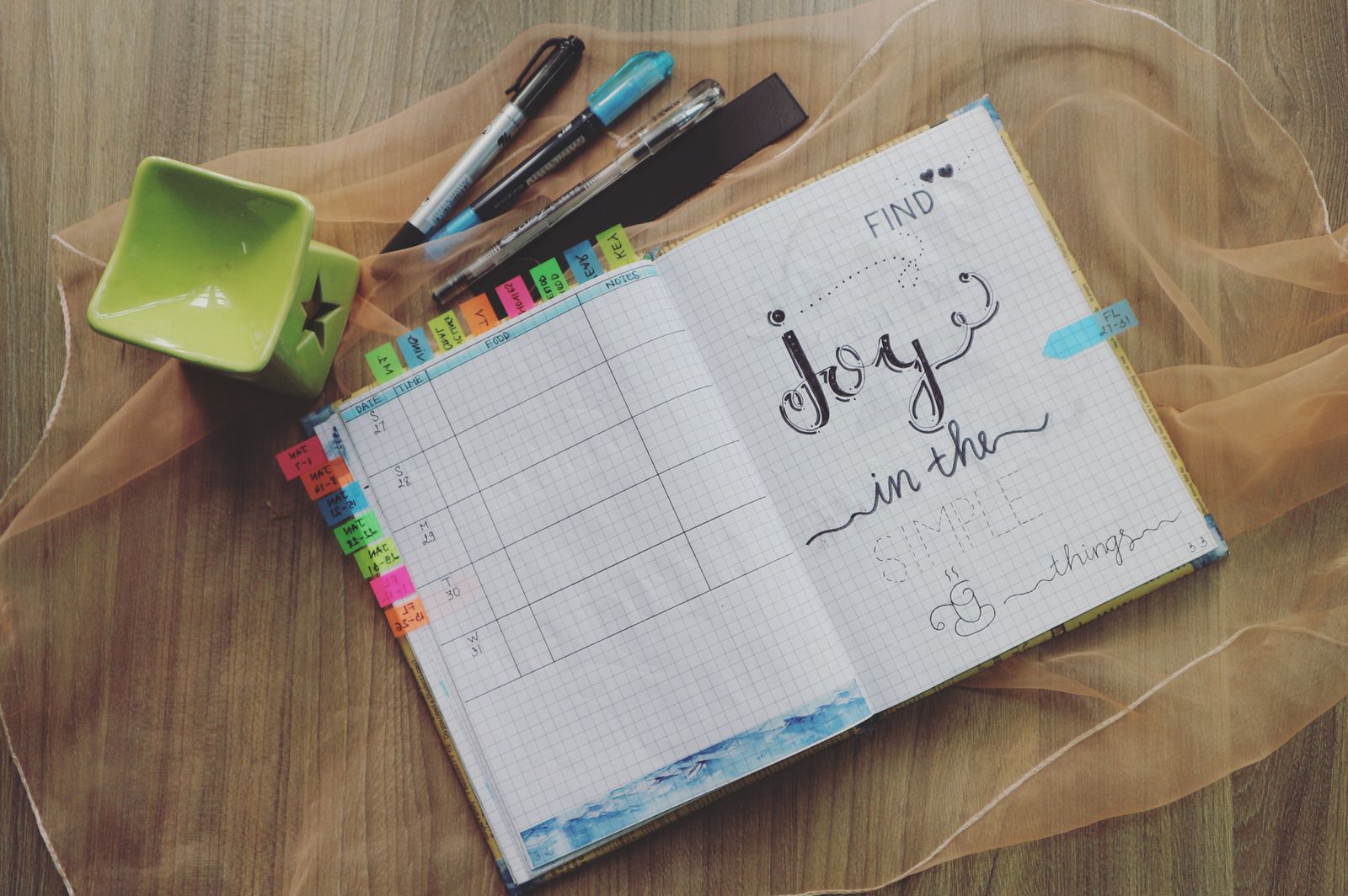
5 Questions to Reflect & Plan for the New Year
A short guided reflection that walks through five questions for reviewing the past year and setting clear, meaningful intentions for the next one.
You open last January’s goal list and feel your stomach tighten. The course you planned to finish? Still waiting. The exercise routine? Inconsistent. That ambitious career move? More complicated than expected. For a moment, twelve months of living shrink into a handful of unchecked boxes.
But what if those boxes are telling only a small part of the story?
Maybe you supported someone through a difficult season. Learned to say no without writing an apology essay. Kept showing up at work while managing uncertainty. Those experiences matter, even if your planner never had a space for them.
A useful year-end review of 2026 is not a trial where you prosecute yourself for unfinished goals. It is a way to gather evidence, understand your choices, and make a more realistic plan for 2027. Done well, it replaces vague disappointment with specific direction.
You do not need an expensive journal, a perfect memory, or a five-year vision. You need a little uninterrupted time and a willingness to ask better questions. Here is a practical seven-step process for turning this year’s experience into next year’s decisions.
1. Set Up a Review You Will Actually Finish
Imagine Maya, a fictional project coordinator, sitting down in December with a fresh notebook. She writes, “Review my entire life,” stares at the page, and reaches for her phone. The problem is not a lack of self-awareness. The assignment is simply too big.
Now imagine she writes a smaller instruction: “Find five moments from 2026 that explain what I want to keep or change.” Suddenly, there is somewhere to begin.
Define the job before you start: your review should produce a short account of what happened, a few lessons, and a manageable set of next steps. It does not need to explain everything.
Choose a realistic time window
Try a 60- to 90-minute session as a starting point, not a requirement. Spend roughly a third gathering evidence, a third interpreting it, and a third deciding what comes next. If sustained attention is difficult or your schedule is crowded, use three shorter sessions instead.
- Gather: collect your calendar, notes, old goal lists, and any useful records.
- Reduce distractions: silence notifications and keep only relevant tabs open.
- Choose one place to write: a document, notebook, or simple notes app is enough.
- Set a stopping point: decide when you will finish, even if some questions remain unanswered.
If you are doing this before December, review the part of 2026 that has actually happened. Label any remaining intentions as plans, not accomplishments, and schedule a brief update at year-end.
Separate honesty from harshness
Honesty sounds like, “I repeatedly underestimated how long this project would take.” Harshness sounds like, “I never do anything right.” One identifies a problem you can work with. The other turns a behavior into an identity.
Use this opening sentence: “I am reviewing my decisions to learn from them, not to prove my worth.” That distinction makes it easier to examine uncomfortable evidence without avoiding the exercise altogether.
2. Reconstruct 2026 Before You Judge It
Your most recent month can feel like a summary of your whole year. A difficult December may overshadow a strong spring; one recent success may hide a pattern of exhaustion. Before drawing conclusions, rebuild a simple timeline.
Divide a page into four quarters or twelve months. Add major events, completed projects, disruptions, meaningful conversations, and changes in responsibility. Keep the entries short. You are creating a map, not writing a memoir.
Look beyond your original goals
Check sources that remind you what daily life actually contained:
- Your calendar: appointments, deadlines, travel, recurring commitments, and unusually busy periods.
- Photos and messages: celebrations, connections, ordinary pleasures, and people you supported.
- Work or learning records: projects delivered, feedback received, skills practiced, and problems solved.
- Financial records: changes in spending, savings, obligations, or income, if relevant to your review.
- Personal notes: recurring worries, ideas, energy changes, and moments of clarity.
You do not need to collect sensitive material in a new app or upload private messages anywhere. Review information where it already lives and record only the themes you need.
When Maya checks her calendar, she remembers that she spent part of the spring helping a parent recover from surgery. Her abandoned evening course looks different in that context. It still matters that she did not finish, but the explanation is no longer simply “poor discipline.”
Write down three kinds of progress
For each quarter, look for visible achievements, invisible effort, and useful changes. Visible achievements include finishing a qualification or paying off a balance. Invisible effort might include caregiving or maintaining essential routines during a crisis. Useful changes include leaving an unsuitable commitment or asking for help sooner.
Also record what was genuinely hard. A balanced year-end reflection does not require turning every loss into a lesson. Sometimes the accurate entry is, “This hurt, and I am still processing it.”
Finish your timeline with three sentences: “The year began with…,” “The biggest shift was…,” and “By the end, I understood….” These create a clearer starting point than a single verdict of good or bad.
3. Find the Patterns Behind Your Wins and Frustrations
A timeline tells you what happened. Personal growth begins when you ask what made those events more likely. Which conditions helped you follow through? Which situations repeatedly drained your attention?
Look across a handful of life areas: work or study, health and energy, relationships, money, home, and enjoyment. You can adapt these categories. There is no requirement to optimize every part of being human.
Ask questions that reveal causes
- When did I feel most engaged, and what was I doing?
- Which commitments felt meaningful even when they were difficult?
- What repeatedly consumed more energy than I expected?
- Which people, environments, or routines helped me act on my intentions?
- Where did I agree to something mainly to avoid discomfort?
- What did I keep postponing, and what specifically made it hard to start?
Compare at least two examples before calling something a pattern. One exhausting meeting may be an exception. Months of back-to-back meetings that leave no time for focused work suggest a structural problem.
Maya notices that she finished her strongest work during mornings with no meetings. She also sees that most abandoned personal projects depended on finding energy late at night. Her lesson is not “become more motivated.” It is “stop assigning demanding tasks to the hours when I am usually depleted.”
Use the evidence–meaning–action sequence
For each important observation, write three lines:
- Evidence: “I attended the classes I booked with a friend, but often skipped unplanned solo sessions.”
- Possible meaning: “Shared plans and fixed times may help me follow through.”
- Action to test: “Book one recurring session with a friend for the next month.”
The phrase possible meaning matters. A year-end review is not a laboratory experiment. You are developing useful explanations, not proving that one factor caused every outcome.
Consider what was outside your control, too. Illness, layoffs, changing care responsibilities, and other disruptions can alter what is possible. Separate the circumstances you could not choose from the responses you might handle differently next time.
Before moving on, write down three conditions that supported you and three that created friction. Those six observations are often more useful for planning 2027 than another long list of aspirations.
4. Decide What to Keep, Change, and Release
Reflection can become a sophisticated form of procrastination if it never changes a decision. This is where you turn observations into choices.
Create three short lists: keep, change, and release. “Keep” protects what is already working. “Change” identifies something worth adjusting. “Release” makes room by ending or pausing commitments that no longer fit.
Protect what worked before adding anything new
Perhaps a Sunday walk with a friend consistently improved your week. Perhaps preparing tomorrow’s first task helped you start work calmly. These may look too ordinary to belong in an annual plan, but reliable benefits deserve space.
A useful insight: your best plan may need more protection than innovation. If a routine supports your energy, adding three new goals that crowd it out is not necessarily progress.
- Keep: the weekly check-in with your partner, monthly budget review, or protected learning hour.
- Change: the timing of exercise, the scope of a side project, or how quickly you accept requests.
- Release: the unused subscription, outdated goal, or optional obligation you no longer value.
Distinguish a difficult goal from an outdated one
Do not drop something solely because it became uncomfortable. Ask, “If this were easier, would I still want it?” If the answer is yes, you may need a different approach or more support. If the answer is no, you may be carrying a goal that belongs to an earlier version of your life.
Then ask, “If nobody knew I achieved this, would it still matter to me?” This is not a perfect test, but it can reveal how much a goal depends on external approval.
Maya decides to keep learning, change the format from a long evening course to a shorter weekly session, and release the pressure to earn a credential she does not currently need. She has not abandoned development. She has clarified its purpose.
Some commitments cannot simply be removed. When that is true, look for a smaller scope, clearer boundary, shared responsibility, or outside support. “Release” should not become another unrealistic demand placed on someone with limited choices.
5. Turn Your Lessons Into a Focused Plan for 2027
Now you can set goals with something more useful than January enthusiasm: evidence about your actual life.
Choose a small number of priorities for the first part of 2027. One to three is a practical starting range, not a scientifically required number. The aim is to make trade-offs visible. If everything is a priority, you have not yet decided what gets your limited time.
Give each priority a reason and a finish line
For every priority, complete this sentence: “I want to achieve this because it will help me…” Then define what meaningful progress would look like.
“Improve my career” is difficult to act on. “Build a portfolio with two relevant case studies by March 31 so I can apply for a different role” gives your effort a direction and a checkpoint.
Not every goal needs a rigid number. A relationship goal may be better framed around a shared routine and an honest conversation about whether it is helping. Use measures that serve the goal rather than replacing its meaning.
Separate outcomes from actions you control
- Career outcome: move toward a more suitable role. Controllable action: reserve a weekly block for portfolio work and targeted applications.
- Financial outcome: build a buffer. Controllable action: choose an affordable transfer amount after reviewing essential expenses.
- Learning outcome: become more confident using a skill. Controllable action: complete one small practice task each week and seek feedback.
- Connection outcome: feel closer to important people. Controllable action: agree on a recurring time to talk or meet.
Outcomes matter, but other people and circumstances influence them. Tracking your actions helps you see whether you are following a reasonable process even before results arrive.
Plan the first quarter in detail, not the entire year
Give 2027 a broad direction, then make January through March concrete. Identify the first milestone, the recurring action, the resources required, and the date you will review progress.
For Maya, that means choosing a short course in January, practicing once a week, and completing a small work-related project by the end of March. She leaves later decisions open until she knows whether the approach is useful.
Before committing, check your calendar and capacity. Where will the work fit? What will you do less of? What expense or support is involved? A goal without space is still a wish, even when it has a deadline.
6. Build a System That Can Survive an Ordinary Week
Your plan should not depend on becoming a permanently energetic person on January 1. It needs to work when messages pile up, the weather is miserable, and an ordinary Tuesday refuses to cooperate.
The benefits of annual planning are clarity and coordination. Its main risks are overplanning, false certainty, and self-criticism when life changes. A flexible system keeps the benefits without treating the plan as a contract you are forbidden to revise.
Define a normal version and a minimum version
For each recurring action, decide what you will do in a typical week and what is reasonable in a difficult one.
- Learning: a focused 45-minute session normally; ten minutes reviewing one concept when capacity is low.
- Writing: a planned drafting block normally; a short outline when you cannot manage the full session.
- Financial planning: a monthly review normally; a quick check of upcoming essential payments during a hectic period.
The minimum version is a fallback, not a debt you must repay later. And sometimes rest, recovery, or an urgent responsibility should replace the planned activity entirely.
Decide in advance what you will do when friction appears
Use an if–then plan: “If my usual session is interrupted, then I will use my backup slot on Friday.” Linking a recognizable situation to a specific response reduces the number of decisions you have to make in the moment.
You can also remove friction before it appears. Keep learning materials ready. Prepare the next task before ending a work session. Agree on boundaries around focus time. Make the useful action easier to begin rather than relying only on willpower.
Run a short pre-mortem
Imagine it is late March and your plan has stalled. What is the most plausible reason? You may have chosen too much, depended on unreliable childcare, overlooked costs, or scheduled effort at an unrealistic time.
Pick the two most likely obstacles and adjust now. This is not negative thinking; it is practical preparation.
Before buying a planner, course, or productivity subscription, check whether it solves a specific obstacle. Look at the time commitment, recurring costs, cancellation terms, and whether a free method would do the job. A new tool can support a decision, but it cannot make the decision for you.
7. Keep the Review Alive With Small Checkpoints
The real value of your year-end review appears after the notebook closes. Without follow-up, even an insightful December session can become a document you rediscover next winter.
Schedule a short weekly check-in and a slightly longer monthly review. Keep both simple enough that they do not become projects of their own.
Use three weekly questions
- What action moved something important forward?
- What got in the way, and is there an adjustment I can make?
- What is the most useful next step for the coming week?
At the monthly review, look beyond completion. Is the goal still relevant? Is the effort sustainable? Are the early results suggesting a change in strategy? If circumstances have shifted, revise the plan openly rather than quietly abandoning it.
Track only a few useful signals. For a learning goal, you might note practice sessions and one example of applying the skill. For a career goal, track meaningful preparation and responses, not just the number of applications sent. Activity is evidence of effort, but not always evidence of progress.
Create a one-page summary you can revisit
End your annual review by filling in these prompts:
- My 2026 in three sentences: what happened, what changed, and what mattered.
- Three things I am glad I did: include effort or care, not only visible achievements.
- Three lessons: name the evidence behind each one.
- Keep, change, release: choose at least one item for each category.
- My first-quarter priorities: state why each matters and what progress looks like.
- My next actions: identify a practical step and when it will happen.
- My review date: put it on the calendar now.
If the full process feels too much, start with three questions today: What deserves recognition? What needs to change? What is one action I can take next week? A short review you use is more valuable than a comprehensive one you avoid.
Let 2026 inform you, not define you
At the end of her review, Maya still has unfinished goals. What changes is her interpretation of them. She can see the care she gave, the conditions that supported her work, and the commitments that no longer fit. Her plan for 2027 is smaller than last year’s list—and far more usable.
You do not have to enter the new year as a completely different person. You can enter it as someone who understands a little more about what matters, what helps, and what needs to stop.
Open your calendar, choose a review time, and begin with the evidence of the life you actually lived. Then give your future self something better than another demand for perfection: a clear next step, enough room to take it, and permission to adjust along the way.